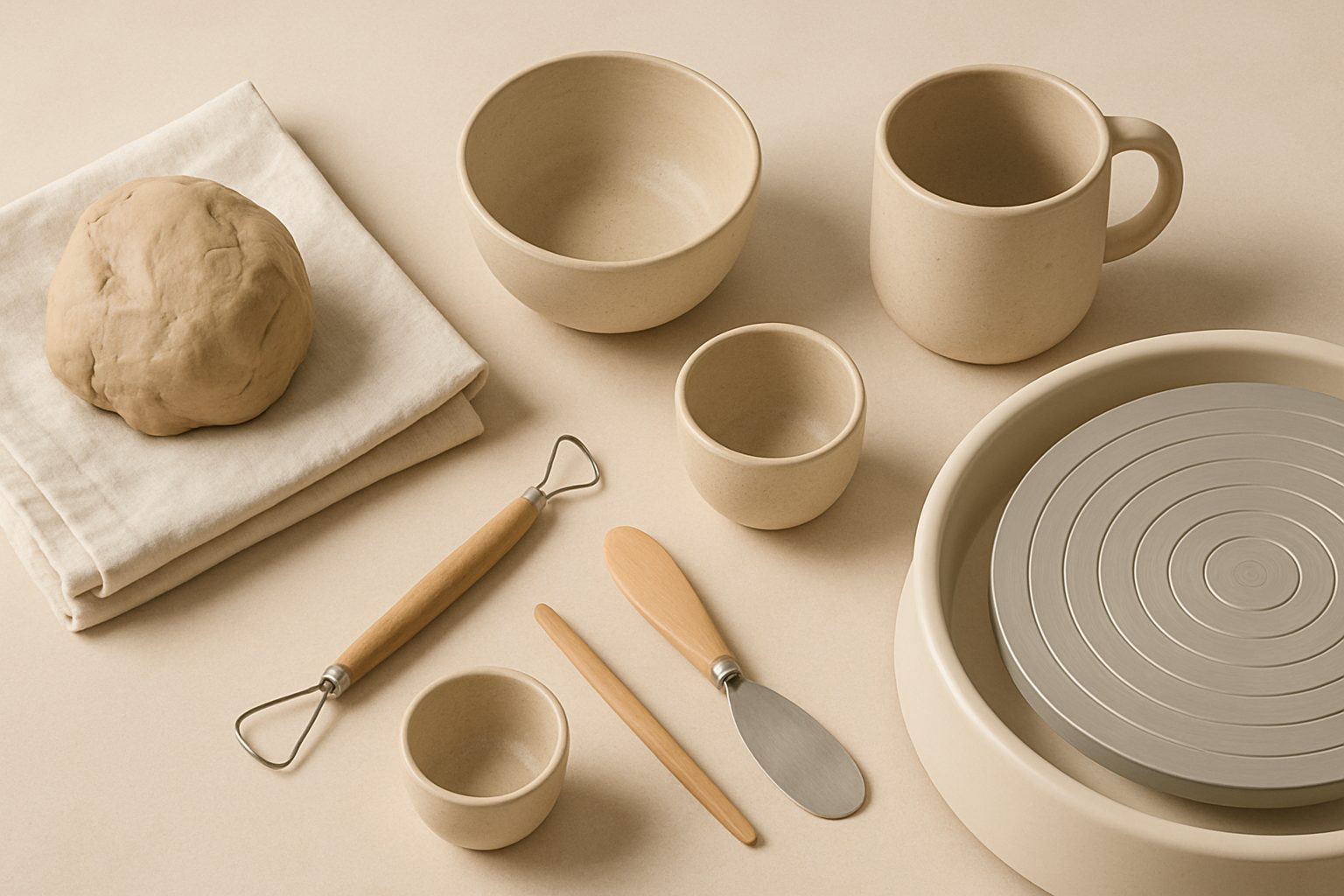
Home Pottery Studio Storage and Shelving Solutions — UK Ideas for Small Spaces
Setting up a pottery studio at home is rewarding but comes with a real spatial challenge: clay, tools, glazes, and finished work take up more room than you'd expect. Most UK potters work in garages, converted sheds, or spare rooms where every shelf counts. The right storage setup means the difference between a functional, creative space and one buried under clay dust and half-dried pieces.
Why Storage Matters in a Small Pottery Space
Pottery generates two types of clutter: active materials and work in progress. Wet clay needs air to dry—stacking pieces too close together invites warping and mould. Glazes, underglazes, and clay slip deteriorate if exposed to temperature swings and dust. Throwing tools, trimming tools, sponges, and hand-building implements multiply faster than you'd think, and tools left in damp conditions rust or crack. Without deliberate storage, you'll lose work to damage, waste materials, and lose creative time hunting for that one brush.
A well-designed storage system doesn't need to be expensive or bespoke. It needs to be honest about your space's humidity, temperature, and actual square footage.
Understanding Your Space Type
Garages are the most common pottery studio base in the UK. They're unheated, often damp, and prone to temperature swings—which affects both clay workability and drying. Shelving needs to handle this: avoid basic chipboard in uninsulated garages; it sags under wet weight and warps with temperature changes.
Garden sheds are smaller and more exposed. Humidity control is trickier, and condensation on metal shelving is common. Look for ventilation solutions before you look for shelving.
Spare bedrooms or utility spaces in insulated homes offer climate control, but you're competing for space with other household functions. Vertical storage and compact solutions are non-negotiable here.
The first decision is honest: can you insulate and heat your space, or are you working with whatever the room naturally offers? This determines what materials will survive long-term.
Shelving Solutions for Wet Work
Open shelving works for most pottery studios because you need air circulation around drying pieces. Melamine or laminate-faced MDF shelves are cheaper than solid wood and handle dampness better in uncontrolled spaces, but they sag if overloaded. Measure your span: for pottery shelves, 90cm between supports is a practical maximum before deflection becomes visible.
Heavy-duty adjustable racking (the kind with metal uprights and horizontal beams) is worth the investment if you're serious. These survive garages and sheds because metal doesn't rot, and you adjust shelf heights as your work changes. They're heavier to install but genuinely last.
For drying racks specifically, avoid deep shelves. Pieces in the back of a deep shelf dry slower than those in front, creating uneven moisture loss and cracking. Two-shelf or three-shelf tall racking with narrower depth (30-40cm) creates better airflow.
Layout for a Garage Studio
If you have a single-car garage, assume 3m × 6m of floor space. Keep half clear for wedging, throwing, and hand-building—you'll hate a studio where you can't step back. Storage lives on the walls.
Install racking along the back wall for drying work (glazed pieces, leather-hard forms, bisque ware). Run narrower shelving along one long wall for tools, clay bins, and glazes. The wall opposite the work area is useful for reference materials and rarely-used equipment. Never shelve above the throwing wheel: dust from racking above a wheel damages the motor and bisque-wares fall into your clay.
A workbench (even a 1.5m fold-down) takes less footprint than you'd expect and keeps hand-building tools organized. Under-bench storage with labelled containers groups similar items together.
Clay and Material Storage
Clay bags take space and absorb moisture. Store them horizontally on a shelf rather than stacked vertically—the bottom bags compress, clay hardens at the edges, and waste increases. Use airtight plastic containers for slip and glazes; they reduce evaporation and prevent skin formation. Label everything with a permanent marker: glaze recipes and clay batches look identical.
A simple trolley (the kind with three deep plastic shelves) works well for portable storage—clay, underglazes, buckets, and sponges roll to your work area and roll away when you're done. It's one of the few storage moves that actually frees up floor space.
Dealing with Humidity and Temperature
UK garages and sheds are damp. Wet work stays wet longer. You have two realistic options: accept slower drying and plan projects accordingly, or invest in dehumidification.
A basic dehumidifier (under £100) runs continuously in an uninsulated shed and makes a genuine difference—drying times drop from weeks to days. Even without dehumidification, open shelving and cross-ventilation prevent the worst: water pooling on glazed pieces and mould growth.
Avoid closed cabinets for drying work. A locked cupboard is fine for finished pieces, but anything damp needs open air.
Budget-Conscious Setup
A small pottery studio doesn't need expensive solutions. Heavy-duty four-shelf adjustable racking units are £60–£150 each depending on size; two or three units cover most needs. Melamine shelves and basic brackets cost less but need replacement after 3–5 years in a damp garage. Plan for the long term: the metal racking pays for itself in durability.
Plastic storage boxes and labelled containers (£5–£20 each) organize tools and materials far more cheaply than bespoke pottery storage. Most potters end up with mismatched shelving anyway—it works fine.
The Small Wins
Mount a pegboard on one wall for throwing tools—it takes up no floor space and keeps essentials visible. Use tension rods in cupboards to hang sponges and towels. Stack bat boards vertically in a shallow shelf unit rather than horizontally; you free up half the footprint.
The goal isn't Instagram-perfect storage. It's finding a drying rhythm that works, keeping materials from deteriorating, and having enough clear space to make work without fighting for room. A small UK pottery studio that's honest about its climate and built to that reality outperforms a cramped space that tries to be something else.
More options
- Pottery Wheels (Electric & Tabletop) (Amazon UK)
- Home Pottery Kilns (Compact & Beginner) (Amazon UK)
- Pottery Clay (Stoneware & Earthenware Bags) (Amazon UK)
- Pottery Tool Kits & Hand Tools (Amazon UK)
- Pottery Glazes (Brush-On & Dipping) (Amazon UK)