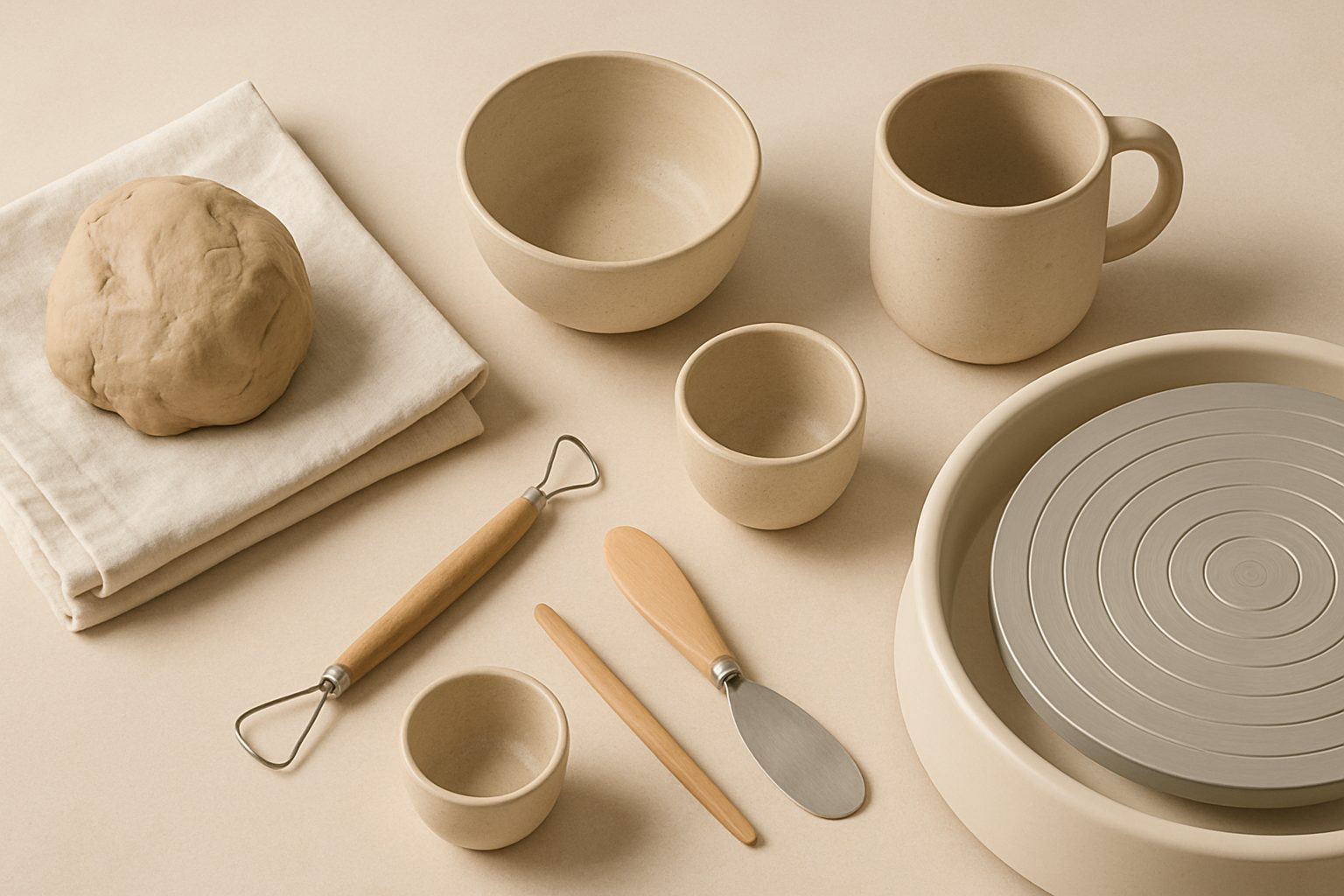
Best Pottery Tool Kits for Beginners in the UK (2026 Review)
Starting pottery at home means choosing between ready-made kits and buying tools individually. Both approaches work, but they suit different budgets, spaces, and learning styles. If you're setting up a home studio for the first time, you'll face a genuine trade-off: complete kits offer convenience and matched tools, whilst buying separately lets you choose quality and avoid paying for things you won't use.
This guide covers what's actually available in the UK market right now, what beginners genuinely need, and whether branded kits or own-brand alternatives make better sense for your setup.
Complete Kits vs. Building Your Own
Complete pottery tool kits promise simplicity. You open the box, you have what you need, you start working. That sounds ideal when you're new, and it often is—especially if your space is small or you're unsure how committed you'll be.
The catch is specificity. Most general kits include tools for hand-building, wheel work, and glazing, but they're rarely optimised for what you'll actually do first. If you're planning to focus on hand-building coil pots, you're probably overpaying for wheel-trimming tools you won't touch for months. If you're committed to wheel throwing, some kits include underpowered loop tools that won't save you time.
Building your own set means researching each tool, ordering from different suppliers, and waiting for stock. But you end up with exactly what your first projects need, and you're more likely to know what each tool does and why. Many potters working at home prefer this approach because it forces you to be intentional.
The honest middle ground: buy a small entry kit (under £40), use it for three months, then replace the weak tools with better versions based on what you've actually learned about your practice.
Xiem Tools Kits
Xiem is a Chinese manufacturer that dominates budget pottery kits on Amazon UK. Their kits typically run £25–£45 and include eight to twelve pieces: loop tools, ribbon tools, sponges, wire clay cutters, and trimming tools.
What works: the loop tools are surprisingly decent for hand-building and centering on the wheel. The ball tools are useful for scoring and texturing. The price means you're not over-committing financially.
What doesn't: the wooden handles feel thin, and some pieces are genuinely redundant (you'll never need three identical flat tools). Sponges are basic but get the job done. Many people report that after six months of regular use, several tools feel loose or wobbly where the handle meets the metal head.
Verdict: good for a three-month trial. Spend the £35, learn what you actually use, then upgrade.
Kemper Tool Kits
Kemper is American, and their kits are more expensive (£60–£100 on UK stockists) but built for durability. Their starter set typically includes six to eight well-chosen tools: wooden-handled loop tools, ribbon tools, a sponge, and a few specialty carving implements.
The difference is noticeable. Kemper handles are thicker and better finished. The metal doesn't feel flimsy. If you're buying at this price point, you're often keeping these tools for years, not replacing them within a season. They're also better balanced for extended hand-building sessions, which matters if you're spending three hours at the wheel.
The trade-off: you're paying nearly three times the Xiem price. That's worth it if you're certain you'll stick with pottery, but it's a bigger financial risk if you're testing the hobby.
Verdict: invest here if you've already done a beginners' course or you're convinced pottery is something you'll keep doing.
Amazon UK Own-Brand Kits
Amazon's own pottery kits (usually under their AmazonBasics or generic "pottery tool set" listings) sit at £20–£40. These are often rebranded versions of the same suppliers that make Xiem kits, sometimes with slightly different selection or packaging.
Quality is inconsistent—you're genuinely rolling dice here. Some sets are well-chosen and practical; others include tools that feel like filler. The main advantage is returns: if you get a kit that doesn't work for you, sending it back to Amazon is straightforward. If you're ordering a Xiem kit from a third-party seller, returns are more painful.
Verdict: acceptable if you're buying to try pottery before spending more, and only if you're using Amazon Prime for quick return shipping.
What You Actually Need to Start
Before choosing a kit, know what you'll do first. Hand-building coil and pinch pots needs: wire clay cutter, wooden modelling tools in at least two sizes, sponge, needle tool, and ribbon tool. Nothing else is essential—everything else is comfort.
Wheel throwing adds loop tools and a trimming tool to that list. Glazing means you'll eventually want a bucket and sponge for cleaning, but that's not a "kit" purchase.
Most kits include everything above. The question is whether they include useful extra items or pointless ones. Read reviews from people describing what they actually used, not what sounds professional.
Price vs. Quality Reality
The £25 kit isn't a scam, and the £80 kit isn't necessarily better for beginners. The real break-even is around £50: below that, you're gambling on durability; above that, you're paying for consistency and handle comfort rather than pure function.
If you have £50 to spend, you'll have a better experience than if you spend £25. But if you have £25, spend it—three months in, you'll know whether pottery is worth the next £50 investment.
What to Actually Buy
Start with a budget Xiem or Amazon own-brand kit (£25–£35). Work with it for ten weeks. Note which tools you reach for constantly and which gather dust. Then replace the weak ones with Kemper or better individual tools.
This approach costs slightly more overall than buying once, but you learn what works before committing to something expensive, and you end up with a genuinely useful set rather than a compromise kit that tries to do everything.
Your space and budget matter more than the brand on the box. A £30 kit you use consistently beats a £80 set gathering dust because you felt pressured to invest too early.
More options
- Pottery Wheels (Electric & Tabletop) (Amazon UK)
- Home Pottery Kilns (Compact & Beginner) (Amazon UK)
- Pottery Clay (Stoneware & Earthenware Bags) (Amazon UK)
- Pottery Tool Kits & Hand Tools (Amazon UK)
- Pottery Glazes (Brush-On & Dipping) (Amazon UK)